
From the studio
It Worked. We Won’t Be Doing It Again.
I’d already finished recording the audio for Queen’s Crazy Little Thing Called Love. The bass part was done, the music was ready, and all we needed was the video.
How difficult could that be? We’d already managed to publish 66 of them.
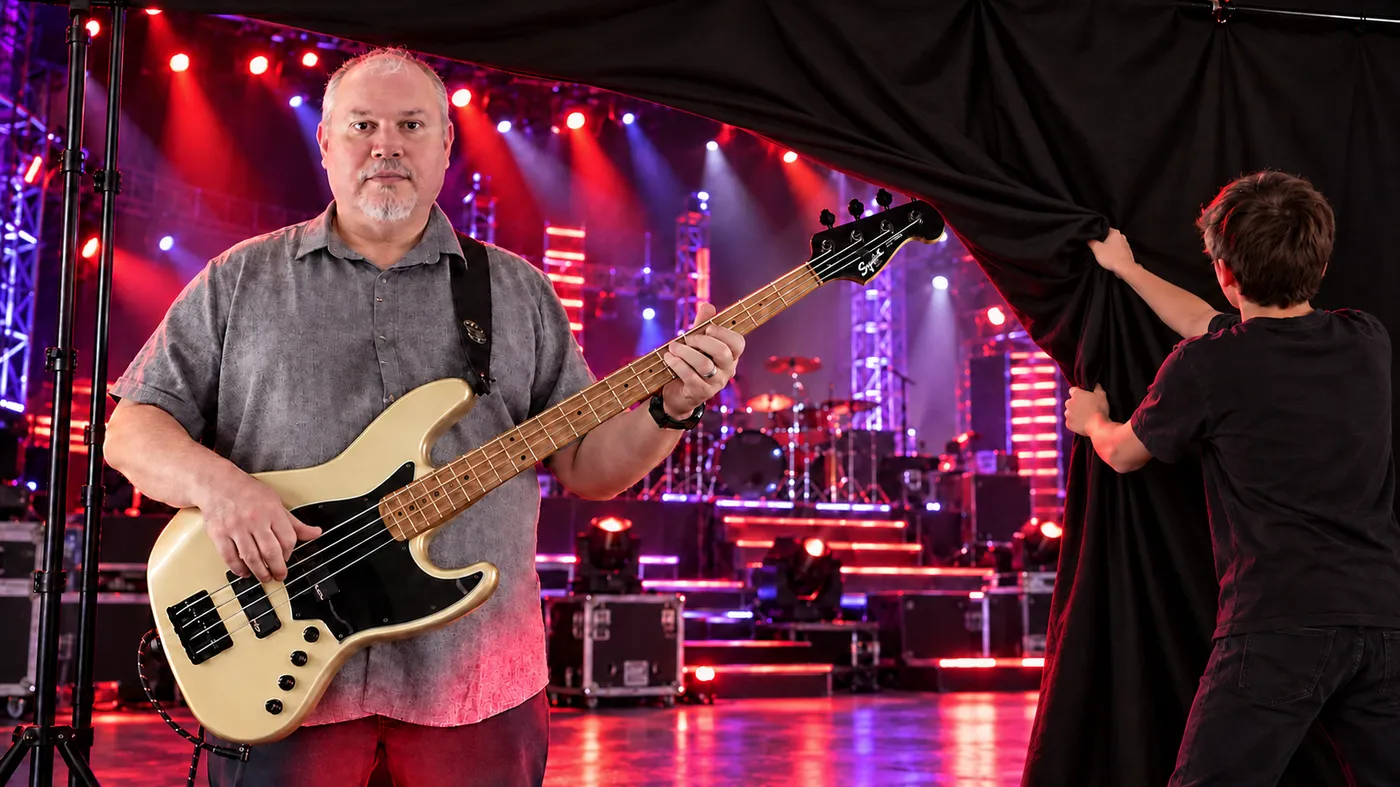
Eight takes later, we were still trying to get the lighting right.
I was playing along with the finished track while we experimented with the lighting. By this point, I’d played the song so many times that I was starting to lose track of how I’d phrased it on the original recording.
Some Assembly Required
In my imagination, Blackout Arena, our virtual concert venue, had dramatic lighting, a convincing stage, and the feel of a professionally filmed performance.
In practice, it’s me playing bass in front of a piece of fabric while my son and I try to make everything else look like a concert.
We’ve become surprisingly good at that.
Our first Blackout Arena performance, Fleetwood Mac’s The Chain, reached 100 views in just over a third of the time it took our previous fastest video. And we’d made it without the moving concert lights or black backdrop we’d originally planned to use.
Neither had arrived in time, so we’d improvised with green screen. Naturally, the backdrop showed up just as my son was leaving.
Now we had everything, and Crazy Little Thing Called Love was our chance to try the approach we’d envisioned from the beginning.
My son had put considerable thought into the production. We worked together on lighting colors, placement, and when the lights would change during the song. He’d even developed a control panel that brought our new concert lights and existing front lighting together, putting everything at his fingertips.
This is one of the things I enjoy most about working with him. We both bring ideas about how the performances might look, and his growing production skills keep giving us new ways to explore them.
Occasionally, we also discover just how much work we’ve created for ourselves.
Getting the lights to produce the atmosphere we’d imagined was considerably harder than expected. We’d improve one thing only to discover something else didn’t look right.
Purple was particularly unhelpful.
And every time we wanted to evaluate another arrangement, I played the song again.
Seeing It Through
Eventually, we had footage we could use. Getting it into Blackout Arena was another matter.
We’d planned to use the black backdrop to give ourselves more freedom with concert lighting than our green-screen process allowed. The idea was to blend its darkness into a virtual stage while preserving the real lighting we’d captured.
That worked, provided the arena had enough darkness behind me to hide the backdrop. We wanted a convincing concert venue, but couldn’t show too much of it where I was standing.
Our trusty AI companion was happy to generate possibilities. Whether having an endless supply of possibilities actually makes a project easier to finish is a question I’m still considering.
After considerable experimentation, we found a design that worked. My son brought the footage, lighting, and virtual arena together.
We had a finished video.
I was delighted, and particularly proud of my son. He’d invested considerable effort before we ever started recording, worked through the frustrations of the lighting, and kept finding ways to bring the production together. This project demanded a lot from both of us, and he stuck with it until we had something we could share.
There’s a particular satisfaction in finishing something difficult together.
We published the video.
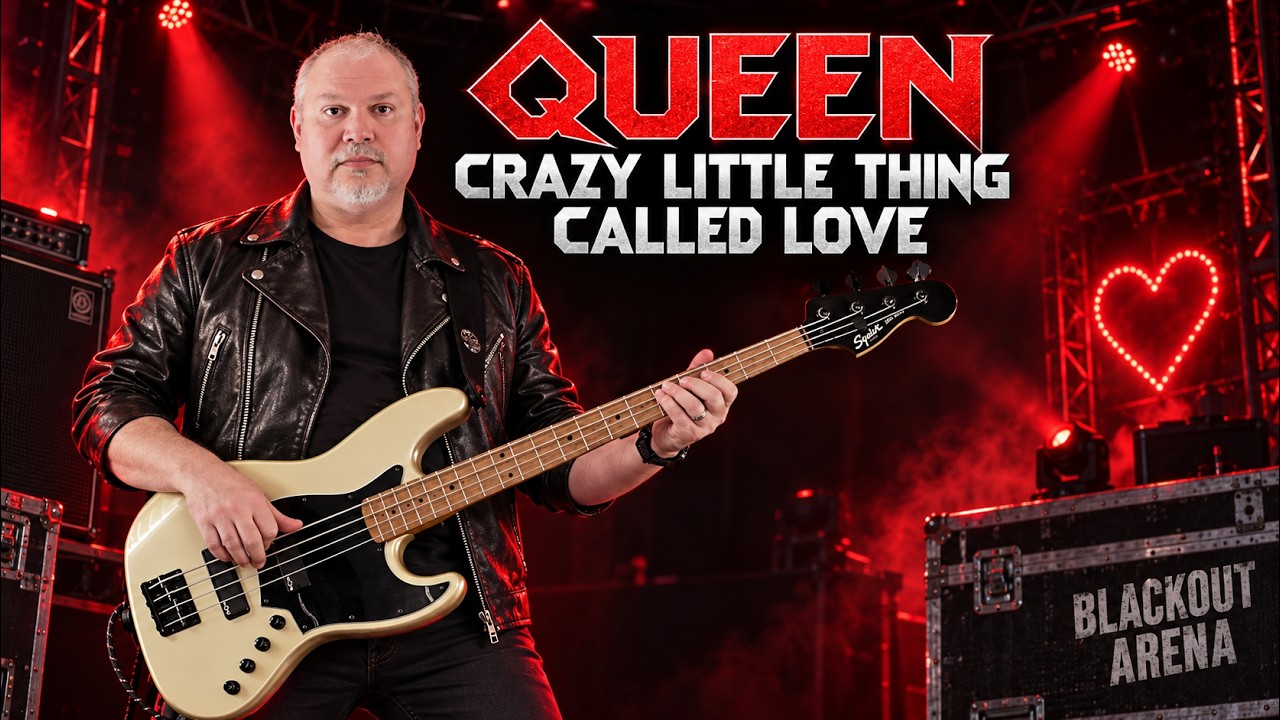
But the finished production also revealed a compromise we didn’t want to repeat. The wider view worked reasonably well; our favorite close-ups largely zoomed into a black void. We’d built an entire concert venue, then arranged for most of it to disappear.
The technique accommodated our lighting, but all that extra work hadn’t given us a better way to present the music.
It worked. We just didn’t see much reason to do it again.
Something Worth Learning
Not long afterward, we revisited Final Cut Pro’s Magnetic Mask. Instead of designing the arena around the backdrop, perhaps we could separate me and the bass from it altogether.
We tried it with the existing Crazy Little Thing Called Love footage. After a few selections and an analysis, we placed the performance against the detailed street scene we’d used for Billie Jean.
There I was, playing bass with scenery behind me instead of black fabric, and the real concert lighting still visible.
After everything we’d gone through to work around that backdrop, a few clicks suggested we might simply be able to remove it.
Of course.
That could give us the flexibility we’d enjoyed with green screen, without giving up our moving concert lights.
We might even be able to use green lighting. Or wear green.
Imagine that.
This was an encouraging test, not a completed production. We still have plenty to learn before we can rely on Magnetic Mask throughout a video.
Naturally, that didn’t prevent us from imagining more elaborate concert environments, full-body performance shots, and atmospheric haze drifting across the stage.
Maybe even bringing back our virtual flames.
But for now, we’re going to concentrate on making this approach reliable and Blackout Arena more convincing. There’s plenty to explore before it becomes as familiar as the green-screen process my son already knows so well.
I’m looking forward to seeing what we can do with it together.
And we still have plenty of music to play.
The flames can wait.
Probably.
Join the conversation
Comments
No comments yet. Start the conversation.