
From the studio
How Our Bass Covers Became Productions
When we started making bass cover videos, the idea was pretty modest.
I was getting comfortable enough with my playing to record complete songs, my son knew the basics of video editing, and making a few covers for YouTube sounded like fun.
That was really the whole plan.
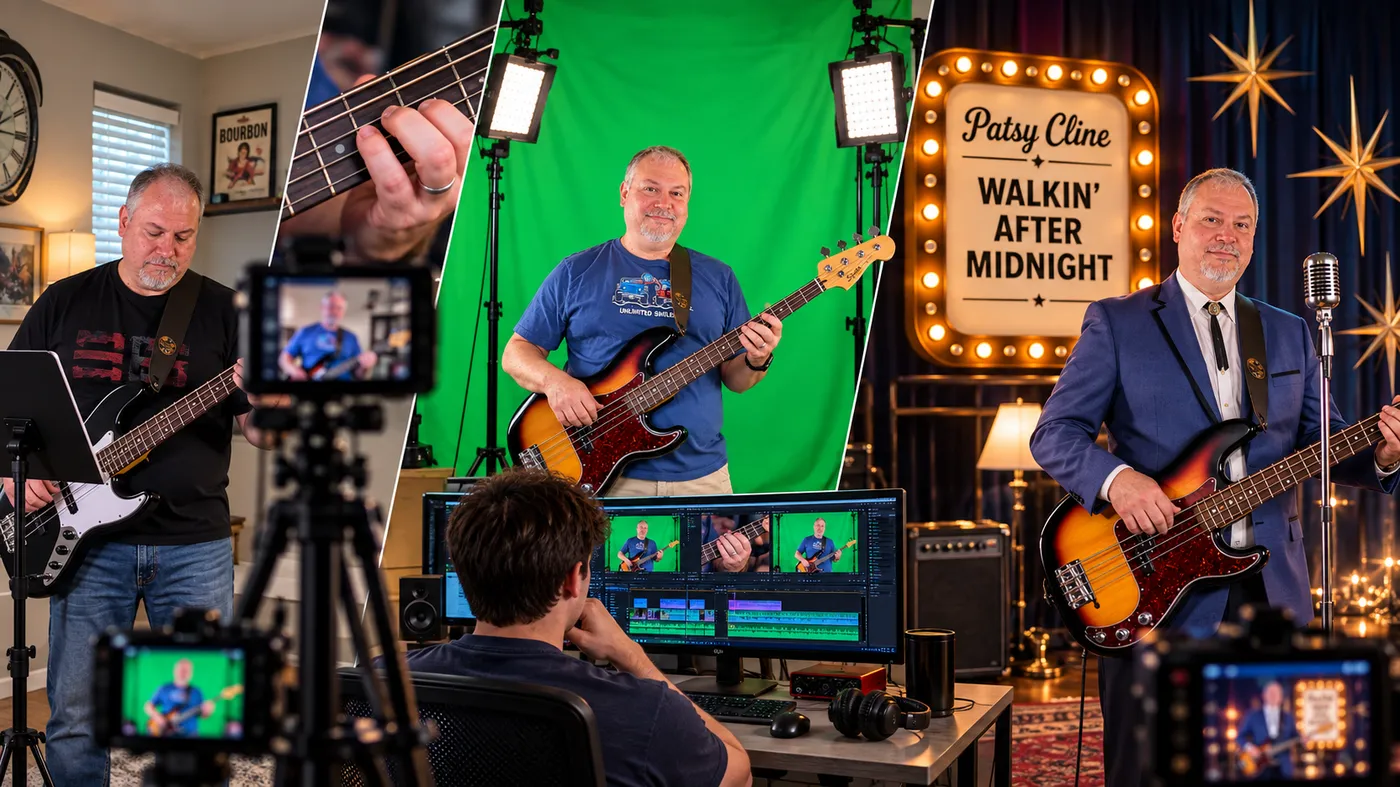
The early videos were simple because they needed to be. I played the song. We set up the camera and recorded the performance. He edited the footage. We posted the finished video.
At that point, getting a performance I was willing to share felt like the accomplishment. I was a developing player documenting the process of getting better, and recording gave that process somewhere to live.
What I didn’t realize yet was that making the videos would become another creative project of its own.
Taking the Project With Us
One of the early videos my son still remembers fondly is With or Without You.
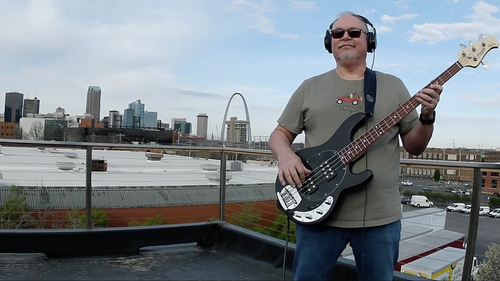
We recorded it outside on a rooftop during a spring getaway to St. Louis. We hadn’t been making videos very long, and already our little recording operation had become portable.
Bass. Recording gear. Cameras. Whatever we needed to make it work came with us.
The project was no longer tied to one room or one routine. A song could become part of wherever we happened to be, and the finished video could carry some of that experience with it.
Maybe that’s part of why With or Without You still stands out to him. Maybe he simply likes how the video turned out. I suspect it’s some combination of the two.
Either way, the recordings were beginning to collect memories around them. And as they became more than evidence that I had learned another song, we began paying more attention to how they were presented.
Figuring Out What the Viewer Should See
Bass creates an interesting problem on video.
A lot can be happening musically while, visually, I’m still mostly standing in one place playing bass. I may be thinking about timing, muting, articulation and whatever my hands are doing through a phrase.
From across the room, it can still look like a guy holding an instrument.
One of our first experiments was adding another camera.
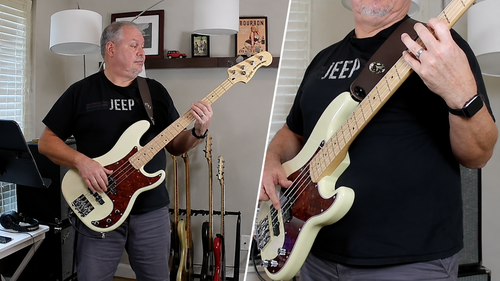
On songs like Dancing in the Street and La Danse de Mardi Gras, the extra angle gave us somewhere else to go visually. It also let us get closer to the instrument and show the fingering.
That distinction came more naturally to my son than it did to me. I was thinking about variety. He was thinking about what the viewer should actually see.
Once the footage reached the edit, he also began changing angles around musical phrases rather than cutting simply because another camera was available.
We never sat down and made rules for any of this. It evolved as we worked. But the editing was starting to do more than assemble the performance.
It was beginning to interpret it.
Then We Removed the Room
Green screen changed things much more dramatically.
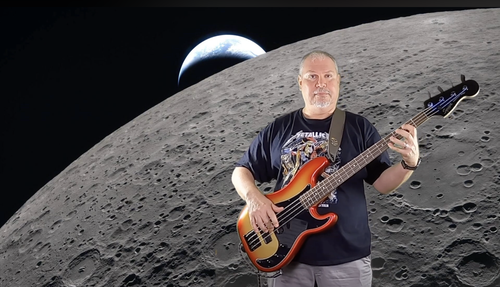
Our first attempt was Money, and it definitely felt like an experiment. It worked well enough to keep going, but there were things to learn.
Before long, green screen became part of the way we made many of the videos. The physical space where we captured a performance no longer had to be the place where the audience saw it happen.
The setting could reflect the song, establish a mood, or be funny, dramatic, strange or intentionally over the top.
I’ve already written about the ideas behind some of those backgrounds. What mattered here was how they changed our approach to the video itself.
The earlier camera experiments had given us new ways to show the performance. Green screen gave us new places for it to exist.
Over time, those environments became one of the things that made the videos feel like ours.
Somewhere along the way, we had stopped asking how to make the process easier. We were willing to make it harder if we thought the result would be better.
Creating Problems on Purpose
Eventually, our ideas started pushing beyond the workflow we had begun with.
GarageBand and iMovie had been more than enough for the early videos. As the recordings became more involved, we wanted more control over the audio, synchronization and editing.
I moved the audio work into Logic Pro, and my son moved the video side into Final Cut Pro. We had reached a point where things we wanted to try were becoming harder to accomplish with the tools we had started with.
Another change was separating the audio recording from the video shoot. That gave me more control over the sound, but it also gave my son another job: lining up the footage with the finished track. The camera’s reference audio became an important part of that process.
The new workflow gave us more room to experiment.
And, predictably, we used that room to make things harder on ourselves.
Walkin' After Midnight is probably the best example.
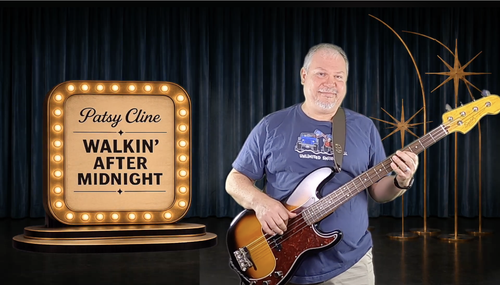
We wanted the sign in the background to have changing lights. Our first attempt used three different background images, which we tried looping.
That didn’t give us the result we wanted.
What finally worked was isolating the sign itself and looping its different lighting states. Getting there was a trial-and-error process. We tried an approach, looked at the result, and changed what we were doing.
The sign made this one of my son’s more difficult edits. It also became the video he was most proud of from a production standpoint.
For exactly the same reason.
I love that.
This began as something I was doing and my son was helping with. Now it’s something we make together.
The Collaboration Changed Too
As the videos changed, so did the way we worked together.
At first, I tended to arrive with an idea of what the video should be. My son handled the filming and editing, and I was still learning how much those decisions could change the result.
Over time, I began bringing him questions instead of answers.
He had spent enough time looking at footage, solving editing problems and figuring out what worked visually that he had developed instincts I didn’t have.
We can still watch the exact same video and see completely different things.
I watch the musician. I hear the note I don’t like, notice the phrase I rushed, and wonder whether I should record another take.
He watches the picture. He notices framing, camera angles and whether I look comfortable in front of the camera.
That last one caught my attention. I hadn’t really thought of comfort on camera as part of the progression, but he had noticed it.
And he was right.
Recording used to feel like an event. The camera added another thing to think about while I was already concentrating on playing the song. Now it mostly disappears.
His perspective also helps when I’m listening so closely for imperfections that I lose track of the finished piece. He notices mistakes, but they aren’t necessarily the first things he sees. He’s considering how the whole video comes across.
He had been contributing to the project all along. What changed was my understanding of how much his judgment could shape it.
The Idea We Couldn’t Have Started With
By the time we made Beverly Hills, we had accumulated months of little lessons.
We had learned how much room an editor needs around a performer, how to work with green screen, and how to synchronize footage with recorded audio. We were also getting a better sense of how far we could push a visual idea before it became distracting.
Musically, this was new territory for me too. For the first time, I recorded both the bass and guitar parts for a cover.
The visual direction came from my son.
He suggested putting both performances on a stage. I didn’t try to steer him somewhere else. I trusted his instincts and went with it.
That gave us a new production problem to solve.
I had created two separate performances that had never actually happened together. His job was to make them share the same virtual stage.
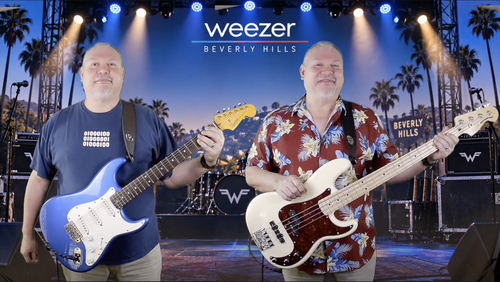
He had to keep both performances synchronized, find room for both versions of me in the composition, and make the result feel like two musicians sharing a scene rather than two clips placed next to each other.
When we first started making videos, that idea probably would have been a mess.
Now it felt like a reasonable thing to try.
And when it worked, we could see how many small things we had figured out together. The cameras, the editing, the green screen and the tools all contributed.
So did the confidence that if one of us had an idea, the two of us could probably find a way to make it work.
Something We Built Together
My son summed up the progression better than I probably could:
“At first, the videos were simple. Now they’re creative and complex.”
There was never a plan to turn bass covers into productions. One experiment led to another.
I still bring the song and the performance. He brings an editor’s eye I’ve learned to trust. Increasingly, the ideas take shape in the conversation between us.
His thinking changes mine. Mine gives him something to build on. By the time a video is finished, it rarely feels like something either of us made alone.
We started because making some bass covers sounded like something fun to put on YouTube.
It still is.
We just didn’t realize how much of the fun would come from figuring out what we could make together.
Join the conversation
Comments
No comments yet. Start the conversation.