
From the studio
A Bass for Every Occasion. Almost.
I have sixteen bass guitars.
I realize that probably sounds excessive, particularly to someone who doesn't play bass. Even among bass players, I'm sure a few eyebrows would be raised.
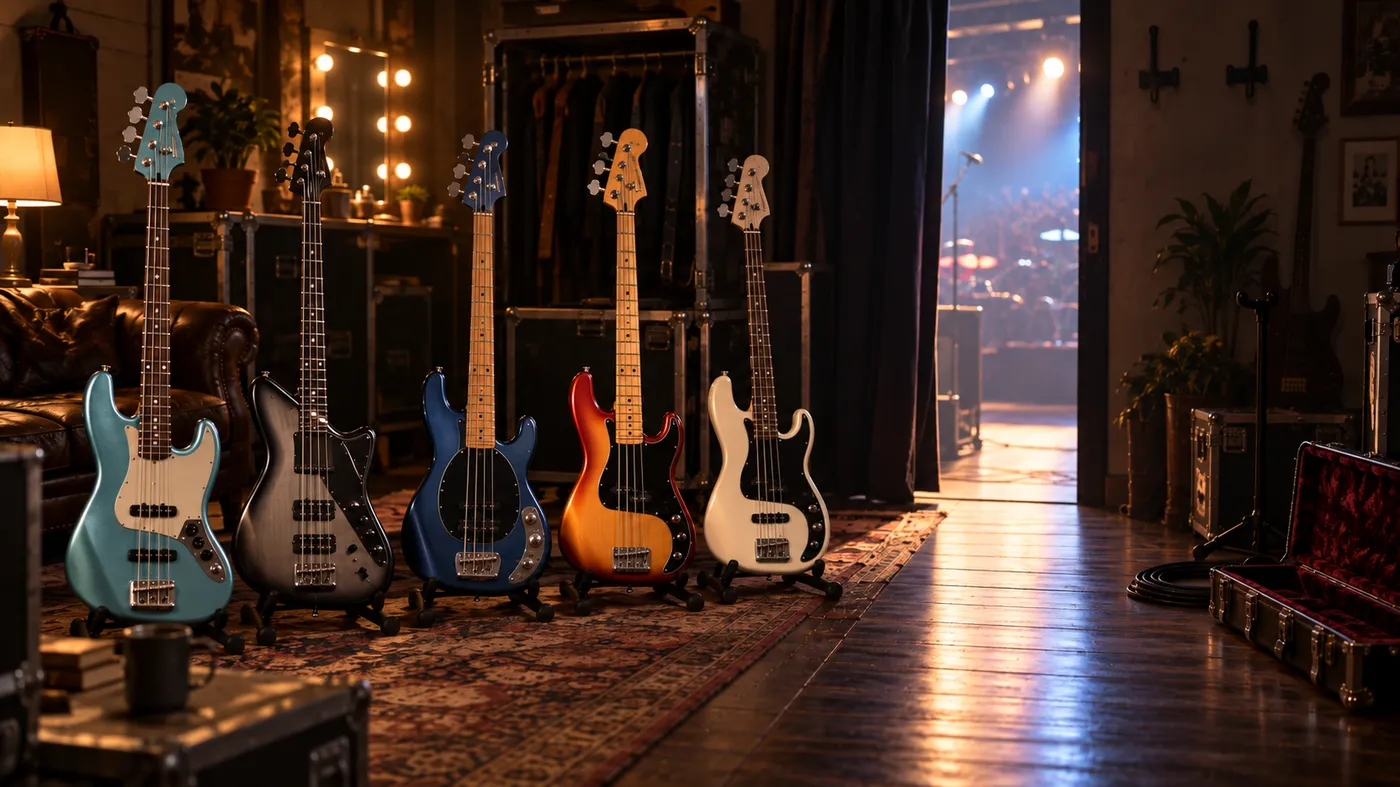
To the casual observer, they probably look like variations of essentially the same instrument. A neck, a body, some knobs, and usually four strings. How different could they really be?
As it turns out, quite a bit.
But I didn't know that when I started. And I certainly didn't set out to own sixteen basses.
In fact, the first one wasn't even supposed to be mine.
How It Started
I originally bought a Yamaha TRBX174 Bass for my son, mostly because I thought it looked cool. When it arrived, I decided to give it a try. That same day, I found an online bass course and started learning.
Before the day was over, I'd already ordered an upgraded Yamaha.
I liked the look and feel of that first Yamaha, so I stayed with the same family when I upgraded. The next model gave me a more modern sound, and I eventually upgraded again for additional features.
All three were shades of red. Apparently, some preferences were established early.
There was also the matter of having two places I call home.
I'd started learning in Indiana, but I wanted to continue playing when I returned to Florida. Rather than buy another Yamaha, I deliberately chose something different: a Precision Bass, with a more traditional sound and a long history in recorded music.
That decision was partly practical, but curiosity had a lot to do with it.
I'd read plenty of advice in online bass forums encouraging beginners to visit music stores and try different instruments before buying them.
So I did.
During one visit, I became enamored with a Fender Player Plus Jazz Bass. I liked it enough to buy it and bring it home.
Two days later, I returned it.
What seemed like a great instrument in the store turned out to be something I really didn't enjoy playing once I spent more time with it.
That experience reinforced something I'd been discovering: a few minutes playing an unfamiliar bass wasn't enough to understand how it would feel and sound over time. Especially when I was still learning.
So I kept exploring, eventually adding a Fender Jazz Bass and another Precision to the collection.
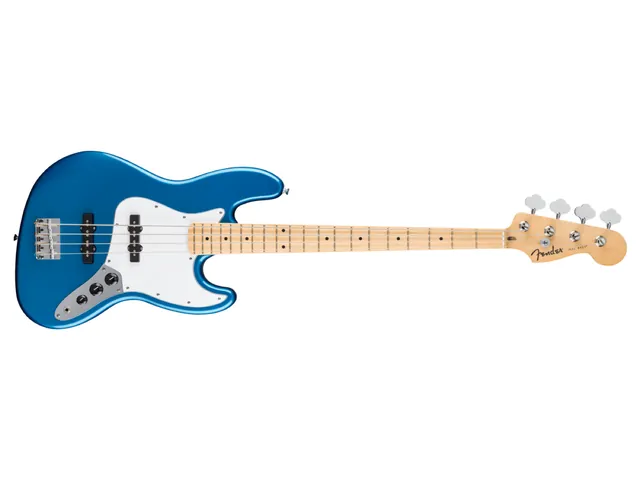
Probably not the most economical approach, but it gave me something a short visit to a music store couldn't: time to get to know the instruments.
By early 2025, I'd established a small collection across Indiana and Florida.
And then, for most of the rest of the year, I didn't buy another bass.
I was busy learning to play the ones I already had.
Getting to Know the Collection
Over time, different instruments naturally found different roles.
My Fender Jazz Bass quickly became my favorite for learning songs. Even today, it has one of the most comfortable necks I've played.
I'd also grown particularly fond of a set of flatwound strings I'd installed. Naturally, I eventually decided to try something different.
That was a mistake.
Once I put the flats back on, everything felt right again. Now, picking up that Jazz Bass feels like slipping into my most comfortable pair of shoes.
Then there's my Squier Affinity Precision Bass.
It's a relatively inexpensive instrument that I've heavily customized over time. I love playing it, and it eventually became my go-to bass for recording in Indiana.
What's funny is that my upgraded Yamaha was sitting right there during those first few months of recording.
I kept choosing the Squier.
A Different Kind of Exploration
As my first year of playing came to an end, my curiosity returned.
I wanted another Precision Bass in Indiana so I could keep different types of strings on two instruments without constantly changing them. But rather than buy another traditional model, I became interested in Squier's Contemporary series.
I fell in love with the Sunset Metallic finish and the idea of a Precision with more modern features.
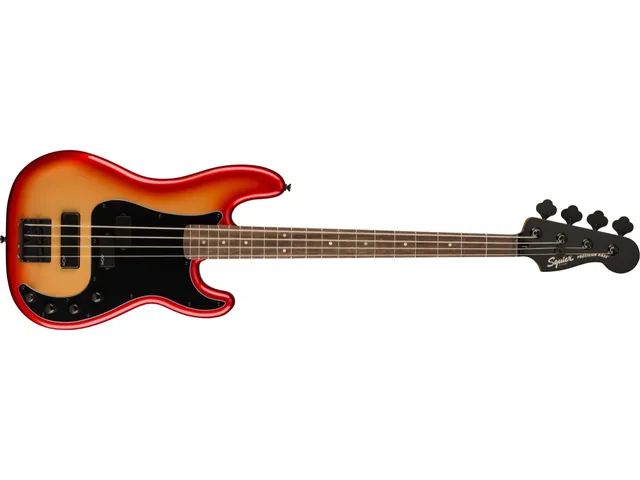
There was just one problem. The model had been discontinued, and I couldn't find one locally or through the usual online retailers.
Eventually, a Google search led me to what appeared to be the last new one available in that color.
Even better, the retailer included a complimentary PLEK setup, a computer-guided process used to improve an instrument's playability.
Another happy accident.
I was so impressed with the bass that it helped influence my wife's decision to buy me a five-string Jazz Bass from the same series for my first bassiversary.
Yes, bassiversary. I'm going with it.
My next purchase was a four-string Contemporary Jazz Bass in Shoreline Gold. I found it on Marketplace, making it my first used instrument.
A couple of months later, I began recording cover videos. That hadn't been part of my original plan, but I'd read about the benefits of reviewing my own performances and getting feedback from other musicians. I decided to give it a try.
And wouldn't you know it? The Contemporary Precision I'd worked so hard to find ended up in my very first cover video.
Recording gave me another reason to explore the collection. I started paying more attention to how different instruments, strings, and effects contributed to the overall sound.
And I discovered that sometimes, after experimenting with several combinations, what I liked best was what I'd started with.
My Jazz Bass could certainly testify to that.
Different When I Want It. The Same When I Need It.
Having homes in Indiana and Florida continues to shape how I approach the collection.
Sometimes I want different instruments, with different sounds and playing experiences.
I've even moved instruments between homes as my preferences have evolved.
The Yamaha eventually made its way to Florida, while the Shoreline Gold Jazz came to Indiana, where it's since appeared in quite a few recordings.
Other times, I want consistency.
As our recordings have become more involved, I've established recording setups in both homes. Having comparable instruments and equipment means I can work toward the same sound regardless of where I'm recording.
I've even carried that approach over to guitar.
I already had a Telecaster and a Stratocaster, each with its own personality. But when I added another Telecaster in Indiana, I deliberately chose the same model and strings as the one in Florida.
This time, I wasn't looking for something different. I wanted to reproduce the same guitar sound in either home, without starting from scratch.
Apparently, some of the lessons learned from collecting basses are transferable.
These days, the bass collection is fairly stable. There are certainly instruments I haven't tried, but I'm not actively looking for another one.
Instead, I'm exploring what I can do with the instruments I already own. Different strings, different effects, and different combinations can reveal something new about a familiar bass.
That's also why the song catalog has become an important part of Professor Plays Bass.
Beyond documenting our recordings and the instruments in our collection, I keep track of the strings and effects used for each song. When I find a sound I particularly like, I want to remember how I got there—and have a reference if I want to recreate it later.
The collection may not be changing much these days, but there's still plenty left to discover.
Almost.
Which brings me to Rancid's "Time Bomb".
For that recording, I wanted to use my Yamaha TRBX604, one of the earliest basses I bought.
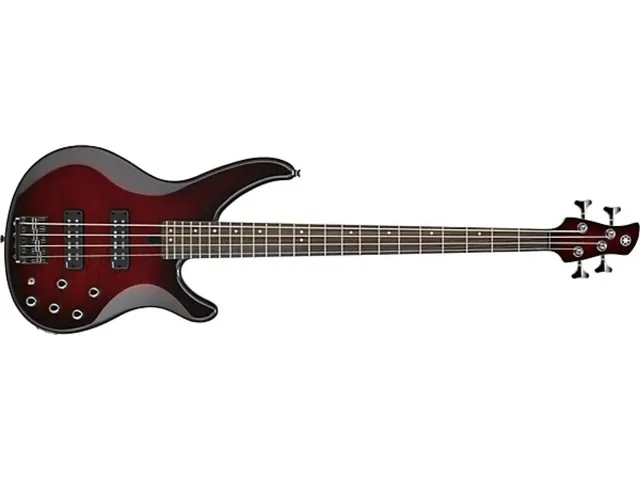
It's not an instrument I play particularly often, and it hasn't appeared in many recordings.
But sometimes, it's exactly the sound I'm looking for.
And for "Time Bomb," that was the bass I wanted.
I'd already recorded the bass track using the Yamaha, but I wanted another opportunity to smooth out the performance. Unfortunately, my plans changed, and that opportunity disappeared.
I could have postponed the project, switched instruments, or worked with what I'd already recorded.
I chose to keep the Yamaha recording.
I've told the rest of that story in Let the Camera Roll. But I couldn't help appreciating the irony.
I'd spent nearly two years getting to know different instruments, building collections in two homes, experimenting with sounds, and establishing recording setups intended to give me flexibility.
And I still found myself making a last-minute decision because I wanted one particular bass.
One of the first ones I'd bought, no less.
Sixteen basses. Two homes. Plenty of options.
And sometimes, only one will do.
Join the conversation
Comments
No comments yet. Start the conversation.